
 Blog
BlogForeigners can get married in Turkey, but the process should be treated as a civil-status document file before it is treated as a ceremony. The municipality will not simply ask whether the couple wants to marry; it will check identity, legal capacity, civil status, age, health report, photographs, translations and document authentication.
The practical difficulty is usually not the wedding day. It is obtaining the correct certificate of no impediment or equivalent document, having foreign documents apostilled or legalized, translating them into Turkish, resolving previous divorce or name differences, and preparing the file in the form accepted by the relevant marriage office.
Contents
1. Short Answer
Foreigners may marry in Turkey if they can prove identity and legal capacity to marry, and if there is no legal impediment under the applicable rules. A civil marriage before an authorized Turkish marriage officer is the legally effective form in Turkey. A religious or symbolic ceremony does not replace the civil marriage procedure.
The marriage file usually turns on documents: passport, photographs, health report, marriage declaration, certificate of no impediment or marriage capacity certificate, birth or civil registry document where required, prior divorce or death certificate where relevant, apostille or consular legalization and sworn Turkish translation. Municipal practice can vary, so the exact document list should be confirmed before travel or appointment planning.
| Before booking the ceremony | The file should answer |
|---|---|
| Who are the parties? | Passports, names, birth dates, parents' names and civil registry data should be consistent. |
| Can each party marry? | The certificate of no impediment or equivalent capacity document should clearly show no barrier to marriage. |
| Are the documents usable in Turkey? | Apostille or consular legalization and sworn Turkish translations should be complete where required. |
| Was there a previous marriage? | Divorce, annulment or death documents should be final, recognized and consistent with the new application. |
| Will the marriage be used later? | Residence, foreign recognition, surname, property and citizenship expectations should be considered in advance. |
2. Who Can Get Married In Turkey?
A Turkish citizen and a foreigner may marry in Turkey before the competent Turkish authority. Two foreigners of different nationalities may also marry before the competent Turkish authority. Two foreigners of the same nationality may marry before Turkish authorities, and in some cases before their own consular authority if their national law and Turkish practice permit it.
The parties must be legally single, have capacity to marry and must not fall within a prohibited relationship category. Turkish law also has age, capacity and impediment rules. Where a party is foreign, their national law may also be relevant to marriage capacity, which is why the certificate of no impediment or equivalent document is central.
3. Which Authority Conducts The Marriage?
In Turkey, marriages involving a foreign party are generally handled by municipal marriage offices or civil registry authorities authorized to conduct marriages. The couple should apply to the relevant marriage office with a complete file and should not assume that a hotel, religious venue or private event creates a legal marriage by itself.
The practical choice of municipality can matter. Some offices deal with foreign-involved files more frequently and may be more familiar with apostilled documents, consular certificates, sworn translations and interpreter requirements. The couple should confirm the current list before collecting documents abroad because a rejected document can disrupt travel and wedding plans.
4. Core Documents Usually Requested
The exact list may vary by municipality and nationality, but most foreign marriage files in Turkey require a consistent set of documents. The file commonly includes valid passports, passport translations where required, photographs, health report, marriage declaration forms, address information and proof of legal capacity to marry.
If one party is Turkish, Turkish civil registry records will usually be checked through domestic systems. If one or both parties are foreign, the foreign civil-status documents must usually come from the competent authority of the foreign state or its consulate, and must be authenticated and translated in a form accepted in Turkey.
| Document | Why it matters |
|---|---|
| Passport | Confirms identity, nationality and spelling of the name used in the marriage file. |
| Certificate of no impediment | Shows that the foreign party is legally free and capable to marry. |
| Birth or civil registry record | May confirm parents' names, birth details and civil status depending on nationality. |
| Health report | Required for the marriage file under Turkish procedure. |
| Photographs | Used for the municipal marriage application file. |
| Divorce or death record | Needed where a previous marriage ended by divorce, annulment or death. |
5. Certificate Of No Impediment Or Marriage Capacity
The most important foreign document is often the certificate of no impediment, certificate of capacity to marry, certificate of single status or equivalent civil-status document. The title differs by country. What matters is whether the document clearly states the person's identity and that there is no legal impediment to the marriage.
Some consulates in Turkey issue this document. Some countries require the person to obtain it from a local civil registry or government authority in the home country. Some documents expire quickly or are treated as current only for a limited period. For that reason, the timing should be controlled before the couple books flights, venue arrangements or a municipality date.
6. Apostille, Consular Legalization And Turkish Translation
Foreign public documents are not automatically usable in Turkey. If the issuing country is a party to the Hague Apostille Convention, an apostille may be required. If the document comes from a country outside the apostille system, consular legalization may be necessary. Some multilingual international civil-status documents may be treated differently depending on the applicable convention and municipal practice.
Foreign-language documents usually need sworn Turkish translation, and in many cases notarization of the translation. The order matters. A document should be authenticated in the correct form and then translated in a way that the Turkish authority will accept. A translation with a spelling error in the name, parents' names or marital status can create avoidable delay.
7. Previous Divorce, Death Of Spouse And Waiting Period Issues
If either party was previously married, the file should show that the previous marriage ended legally and finally. A divorce decree, annulment decision or death certificate may need apostille or consular legalization and sworn Turkish translation.
Where a foreign divorce judgment is involved, Turkish authorities may need to understand whether the divorce is final and effective for Turkish purposes. In some cases, recognition steps may be relevant. Turkish law also contains a waiting period issue for women after the end of a previous marriage, with possible court waiver routes where the legal conditions are met. This should be checked early, not at the municipality counter.
8. Health Report And Local Medical Steps
A health report is part of the Turkish marriage file. The couple should ask the relevant municipality where the report should be obtained and which tests or approvals are required under current local practice.
Foreigners sometimes underestimate this step because it feels administrative. In practice, a missing or incorrectly obtained health report can block the marriage application even where all foreign civil-status documents are ready. The health report should be planned inside the appointment timeline.
9. Municipality Appointment And File Submission
Once the documents are prepared, the couple submits the file to the competent marriage office. The officer reviews the marriage declaration, passports, capacity documents, health reports, photographs, translations and any prior marriage records. If the file is accepted, the office can schedule the ceremony date subject to availability and procedural requirements.
Couples planning a short visit to Turkey should not leave document review to the last day. If a consulate certificate, apostille, translation or divorce record is rejected, the correction may require contacting a foreign authority or issuing a new document. The safest approach is to have the document file checked before travel where possible.
10. Civil Ceremony, Witnesses And Interpreter
The legal marriage ceremony is conducted by the authorized marriage officer. The couple gives consent before the officer, and witnesses are present. Witnesses should be legally capable adults and should bring proper identification.
If one or both parties do not understand Turkish sufficiently, a sworn interpreter may be required so that the parties understand the ceremony and declarations. This should be arranged before the ceremony date. The interpreter should not be treated as a last-minute convenience because some offices will not proceed without an acceptable interpreter.

11. After Marriage: Family Booklet, Multilingual Certificate And Foreign Use
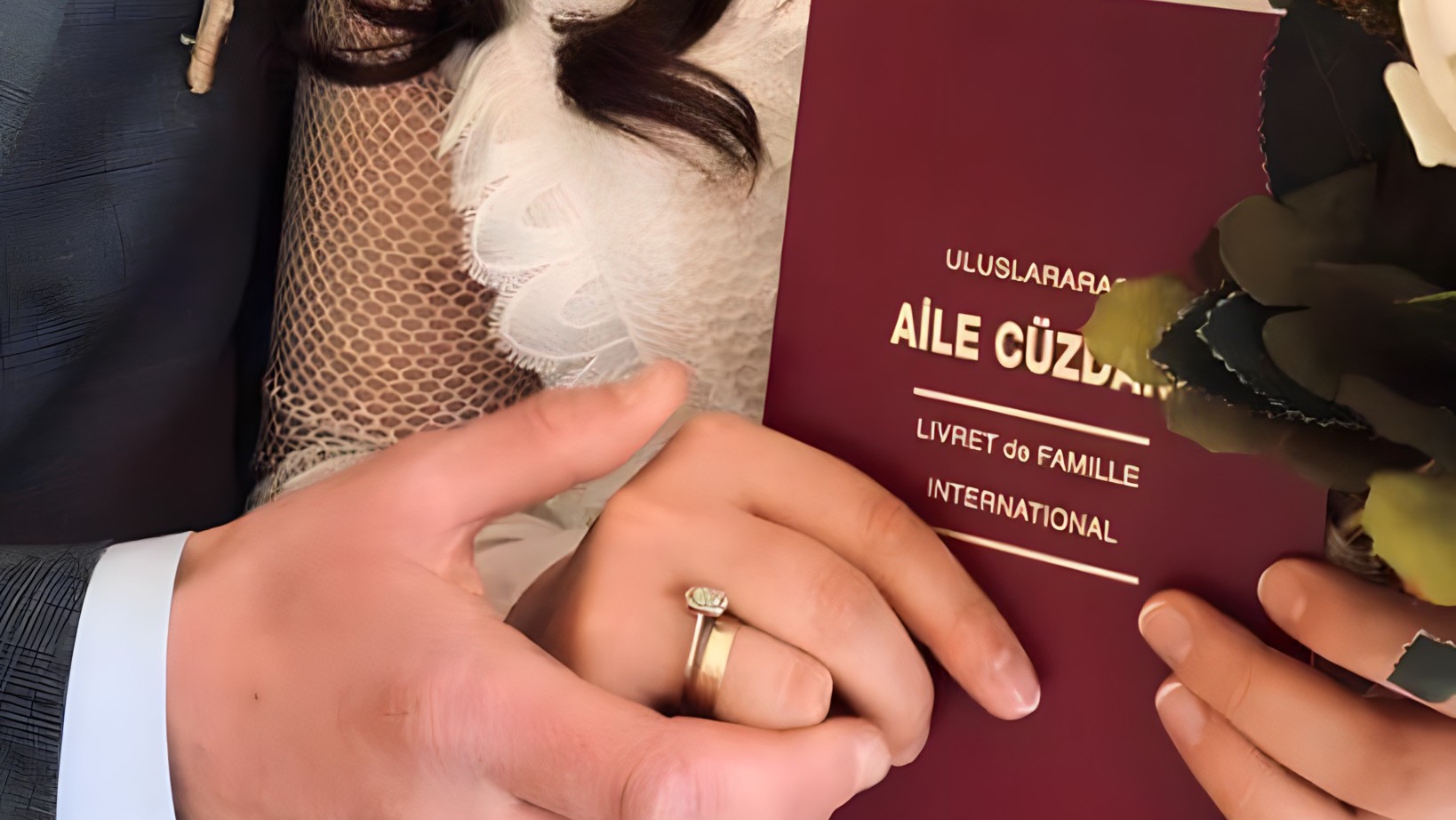
After the civil ceremony, the couple receives a family booklet. Upon request, foreign spouses may also obtain a multilingual marriage certificate from the competent authority. If the marriage document will be used abroad, apostille or further legalization may be necessary depending on the destination country.
A Turkish marriage may also need to be registered or notified in the foreign spouse's home country. The Turkish document alone may not complete all foreign administrative steps. Couples should check the home-country requirements for name change, spouse visa, civil registry update, tax, inheritance or family reunification purposes.
12. Marriage, Family Residence Permit And Citizenship Expectations
Marriage to a Turkish citizen or to a foreigner legally residing in Turkey may support a family residence permit route in appropriate cases, but marriage does not automatically grant residence. The residence file has separate requirements concerning sponsor status, address, income, insurance, family documents and immigration history.
Turkish citizenship by marriage is also separate from the marriage ceremony. It is not obtained immediately by marrying a Turkish citizen. The citizenship route has its own duration and substantive requirements, and should be assessed independently. The marriage file should therefore be prepared accurately, but couples should avoid treating marriage as an automatic immigration or citizenship result.
13. Property Regime, Prenuptial Agreement And Surname Planning
Marriage has legal consequences beyond the ceremony. Turkish law has a default matrimonial property regime unless the spouses choose a valid alternative. A couple with property, company shares, inheritance expectations or assets in more than one country should consider whether a prenuptial or marital property agreement is appropriate.
Surname and foreign civil registry effects should also be considered. A name change in Turkey may need to be coordinated with passport, residence permit, bank, title deed, company and home-country records. For cross-border couples, these points are easier to manage before documents begin moving between authorities.
14. Red Flags In Marriage Files For Foreigners
The following issues should be corrected before the couple relies on a ceremony date:
- The certificate of no impediment does not show parents' names, civil status or capacity clearly enough for the municipality.
- The document is old, expired or issued by an authority the municipality does not accept.
- Names are spelled differently across passport, birth record, divorce decree and translations.
- A previous divorce judgment is not final, not authenticated or not recognized where recognition is required.
- The couple assumes a religious or symbolic ceremony is legally sufficient in Turkey.
- No sworn interpreter is arranged although one party does not understand Turkish.
- The marriage is planned mainly for residence or citizenship without checking those separate legal requirements.
- The couple needs the Turkish marriage document abroad but has not checked apostille or home-country registration rules.
15. How Legal Istanbul Assesses A Marriage File
Legal Istanbul reviews marriage files for foreigners by reading the couple's nationality, civil-status history, previous marriages, document source, apostille or legalization route, translation needs, municipality practice, ceremony timing and post-marriage plans together.
The aim is not to make a personal process unnecessarily formal. The aim is to prevent the couple from arriving at the marriage office with a document file that cannot be accepted. Where the file is clean, legal review helps the appointment proceed with fewer surprises. Where the file is not clean, early review can identify whether a new certificate, recognition step, court waiver, translation correction or different timing is needed.
Consultation for Marriage for Foreigners in Turkey
Send the essential facts, nationalities, civil-status history and timing issue to Legal Istanbul. We will examine the message and respond with the likely legal step for the marriage file.
Primary public reference points include the NVI marriage procedures page, the Turkish Civil Code and Marriage Regulation on Mevzuat, and local municipality marriage office requirements, which may vary by district and document type.
Frequently Asked Questions
Can two foreigners get married in Turkey?
Often yes, if they can provide accepted identity and capacity documents. Two foreigners of different nationalities generally marry before the competent Turkish authority.
Can a foreigner marry a Turkish citizen in Turkey?
Yes, if both parties meet the legal capacity requirements and submit the documents accepted by the competent marriage office.
Is a religious ceremony legally enough?
No. A legally effective marriage in Turkey requires the civil marriage procedure before an authorized marriage officer.
What is the most important foreign document?
The certificate of no impediment or equivalent marriage capacity document is often the central foreign document because it shows that the person is legally free to marry.
Do foreign documents need apostille?
Many foreign public documents need apostille or consular legalization, followed by sworn Turkish translation, unless a specific accepted multilingual document or exemption applies.
Can I marry in Turkey after a divorce abroad?
It may be possible, but the divorce document must be final and usable in Turkey. Recognition or additional proof may be needed depending on the file.
Does marriage give automatic residence or citizenship?
No. Family residence and Turkish citizenship by marriage are separate legal routes with their own requirements and review process.