

 Blog
BlogA family residence permit in Turkey allows eligible foreign spouses and children to reside with a Turkish citizen, Blue Card holder, qualifying foreign resident, refugee or subsidiary protection beneficiary. The file is relationship-based, but the relationship alone is not enough.
The authority reviews whether the sponsor is eligible, whether the family relationship is legally proven, whether the household has sufficient income, registered accommodation, health insurance and credible intent to live together, and whether the applicant has an immigration risk such as an entry ban, removal decision or overstay problem.
Contents
1. Short Answer
Family residence permit applications in Turkey are usually decided by the quality of the file before the appointment. A foreign spouse or child may be eligible, but the application can still fail if the sponsor's status is weak, income is not documented, the address is not registered, health insurance does not cover the family, or foreign marriage and birth records are not properly authenticated.
The application should therefore be prepared as a household file. The documents should show who the sponsor is, why the applicant qualifies as a family member, where the family will live, how the family will be supported, and whether the applicant's immigration record allows a residence permit.
| Question before applying | Why it matters |
|---|---|
| Who is the sponsor? | Turkish citizen, Blue Card holder, qualifying foreign resident, refugee or subsidiary protection status must be proven. |
| Who is the applicant? | Spouse, minor child or dependent child status must fit the family residence category. |
| Is the sponsor file strong? | Income, health insurance, address registration and criminal record issues are sponsor-side conditions. |
| Are foreign documents usable? | Marriage, birth, custody and divorce records may need apostille or consular legalization and sworn Turkish translation. |
| Is there an immigration barrier? | Entry ban, removal decision, overstay or Article 7 issues may lead to refusal or require a different route. |
2. Who Can Apply For A Family Residence Permit?
Under the official family residence framework, the eligible applicants are usually the foreign spouse of the sponsor, the sponsor's foreign minor children, the foreign minor children of the sponsor's spouse, and dependent foreign children where the legal conditions are met. The category is not a general permit for all relatives.
Parents, adult siblings, grandparents or wider family members normally need a different residence basis unless a specific legal route applies. This distinction matters because a family that prepares the wrong permit type may lose time and fall into overstay risk.
Where two foreign spouses are in Turkey, one spouse may need to act as the sponsor if that person has a qualifying residence or work status. The timing of the sponsor's own permit becomes part of the applicant's file.
3. Who Can Be The Sponsor?
The sponsor may be a Turkish citizen, a person within the scope of the Blue Card rules, a foreigner holding a Turkish residence or work permit, or a refugee or subsidiary protection beneficiary. A foreign sponsor's own permit should be valid and practically reliable for the period requested by the family member.
A Turkish citizen sponsor usually proves status through Turkish identity and civil registry records. A foreign sponsor must prove passport, residence or work permit status, address and continued lawful stay. If the sponsor's own renewal is pending or the permit has little time remaining, the family application should be timed carefully.
| Sponsor type | Key point to check |
|---|---|
| Turkish citizen | Turkish ID, civil registry record, address, income and household documents should be consistent. |
| Blue Card holder | Status document and family link evidence should be clearly connected to the applicant. |
| Foreign resident | The sponsor's permit type, validity and renewal timing directly affect the family member's permit. |
| Work permit holder | Work permit status can support sponsorship, but income and address evidence must still be prepared. |
| Refugee or subsidiary protection beneficiary | The file should be checked against the specific protection-status rules and current provincial practice. |
4. How Long Can The Permit Be Granted?
A family residence permit may be issued for up to three years at a time under the official residence permit type guidance. However, it cannot exceed the sponsor's own residence permit duration. If the sponsor has a shorter remaining permit period, the family member's permit will be limited accordingly.
This is why sponsor timing is not a minor detail. A foreign sponsor whose own permit is close to expiry may create a weak family application even if the marriage and documents are real. Renewal planning should be done for the sponsor and the family member together.
5. Sponsor Income, Health Insurance And Criminal Record
The sponsor must show sufficient and regular means for the household. Official guidance refers to a total monthly income not less than the minimum wage, and not less than one third of the minimum wage per family member. The practical evidence may include salary records, bank statements, pension income, company income, rental income, tax documents or other documents accepted by the provincial authority.
The sponsor must also have health insurance covering all family members. In practice, insurance gaps, wrong policy dates or policies that do not match the requested residence period can create avoidable rejection risk. A criminal record certificate may also be requested, especially in relation to crimes against family order during the relevant period.
6. Address Registration And Accommodation
Address is often the point where a formally complete application becomes vulnerable. The family should show where they live or intend to live together, and the address should be compatible with the sponsor's records, lease or title deed, utility documents and address registration system records.
If the family stays with a third person, a notarized undertaking may be requested, and where the host is married, the spouse's consent may also become relevant under practice. If the sponsor or applicant changed address, the update should be handled before renewal or evaluation creates a contradiction.
The accommodation should also be suitable for the number of family members. A lease that does not match the address registration, a utility bill in a different name or a sponsor registered elsewhere can trigger questions even where the family relationship is genuine.
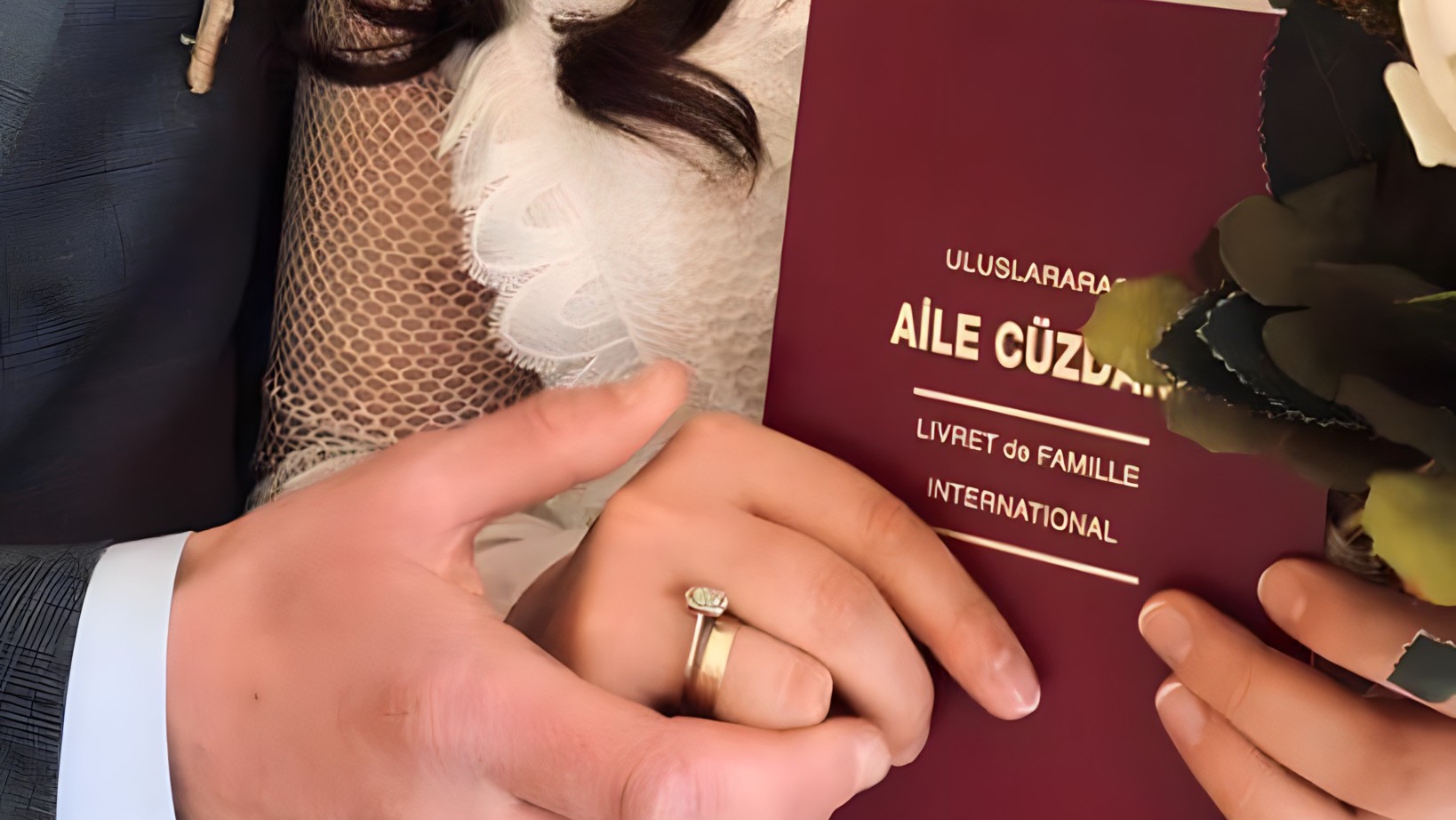
7. Marriage, Children And Genuine Family Relationship
For spouses, the marriage must be legally valid and documented in a form accepted in Turkey. A religious or symbolic ceremony without civil legal recognition will not usually support a family residence permit. If the marriage took place abroad, the foreign marriage record must normally be authenticated and translated before it can be used.
For children, birth records, custody documents, consent of the parent who remains abroad and any divorce or guardianship decision should be reviewed before the appointment. The authority may check whether the relationship is legally proven and whether the child's best interests and custody position are clear.
The family residence category is also sensitive to marriages entered into only for residence purposes. If the marriage is recent, the couple has not lived together, or the record of shared life is thin, the file should be prepared more carefully. Evidence of shared address, communication, family life, children, travel history or joint financial arrangements may become relevant.
8. Apostille, Consular Legalization And Sworn Translation
Foreign public documents are not automatically usable in a Turkish residence file. Marriage certificates, birth certificates, custody decisions, divorce decrees, death certificates and criminal records may need apostille if the issuing country is in the apostille system. If not, consular legalization may be required.
After authentication, the document generally needs sworn Turkish translation and, where required, notarization. The apostille or legalization page should also be translated where it forms part of the document. Name spelling, parents' names, dates and document numbers should be checked before submission because small differences can delay the application.
9. e-Ikamet Application, Appointment And Evaluation
The application begins through the e-Ikamet system. The online form should match the physical documents: names, passport validity, entry information, address, sponsor details, insurance dates and requested permit period should be consistent.
At the appointment, the applicant submits the file to the Provincial Directorate of Migration Management or the relevant unit. Original documents and copies should be ready. The authority may request missing documents, and official FAQ guidance refers to a period of up to 30 days to complete missing documents. If the missing documents are not completed within the given period, the application may be removed from process.
Residence permit applications are generally concluded within 90 days from the date when complete information and documents are delivered to the competent authority. A family should plan travel, school, renewal and overstay issues around this evaluation period.
10. Children, Custody And Education
Children are often the reason the family permit becomes urgent. A child with a family residence permit can benefit from primary and secondary education rights until the age of 18 without needing a separate student residence permit. After 18, the child's status should be reassessed, and a student or other permit route may become necessary depending on the facts.
If one parent is abroad, divorced, deceased or not applying, the child's file should include the relevant consent, custody, death or guardianship documents. The authority will not treat a child's residence file as a simple add-on to the parent's file where custody or consent is unclear.
11. Rights And Limits Of A Family Residence Permit
A family residence permit gives the holder the right to reside in Turkey for the permitted period and supports family unity. It does not automatically grant the right to work. A foreign spouse who wants to work in Turkey generally needs a work permit or a valid exemption under the separate labour-law route.
The permit is also not Turkish citizenship by marriage. Marriage to a Turkish citizen may become relevant to citizenship only after separate statutory conditions are met and assessed. The residence permit file should therefore be prepared accurately, but clients should avoid assuming that marriage, residence and citizenship are one automatic sequence.
12. Renewal, Divorce, Sponsor Death And Turning 18
Renewal should be prepared before expiry, with updated sponsor income, insurance, address and relationship documents. Late renewal can create overstay consequences. If the sponsor is a foreigner, the sponsor's own renewal and the family member's renewal should be coordinated.
If divorce occurs, if the sponsor dies, or if a child reaches 18, the family residence basis may change. Official residence permit type guidance recognizes certain transition possibilities into short-term residence in specific situations, including divorce after residence on family permit for the required period, sponsor death, or the child reaching 18 after a period on family permit. These situations should be assessed before the current permit expires.
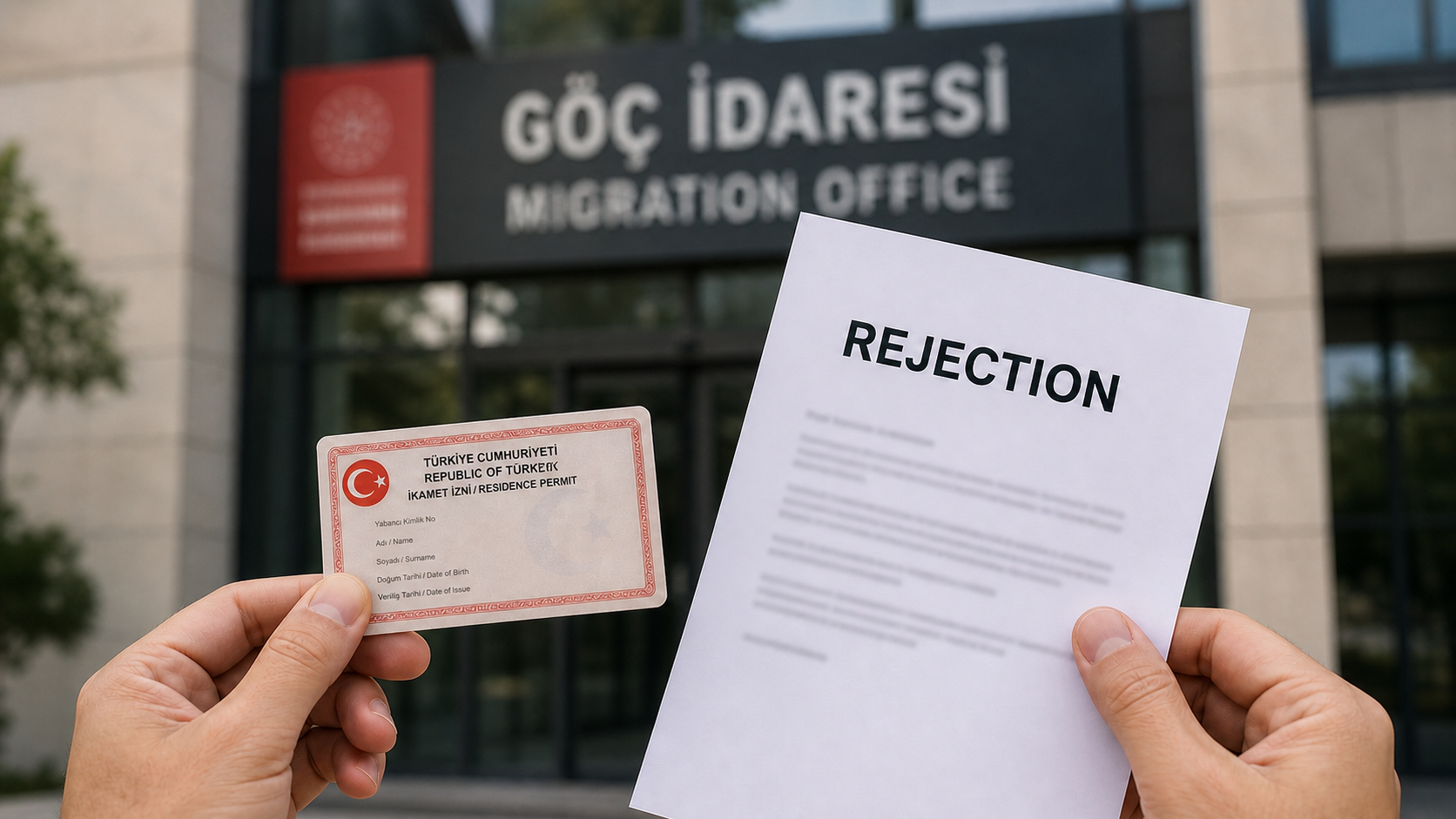
13. Refusal, Cancellation And Non-Renewal Risks
A family residence permit may be refused, cancelled or not renewed if the legal conditions are not met or later disappear, if the permit is used outside its purpose, or if there is a removal decision or entry ban concerning the foreigner.
Practical refusal reasons include insufficient sponsor income, insurance mismatch, address registration problems, missing apostille or translation, unclear custody documents, sponsor permit expiry, contradictory information in the online form, or signs that the marriage was entered into only for residence purposes.
If a refusal occurs, the decision, notification date, objection or lawsuit deadline, current stay status and possibility of transition to another permit route should be reviewed before filing a new application.
14. Red Flags Before Submitting The File
The following points should be reviewed before the e-Ikamet appointment:
- The sponsor's own residence permit expires soon or is under an uncertain renewal process.
- The sponsor income does not clearly meet the household formula or is not supported by accepted documents.
- The lease, title deed, utility bill and address registration point to different addresses.
- The health insurance does not cover all family members or does not match the requested period.
- The foreign marriage or birth document lacks apostille, legalization or sworn Turkish translation.
- A child is applying but custody, consent or parent-abroad documents are incomplete.
- The marriage is recent and there is little evidence of shared life.
- The applicant has an overstay, entry ban, removal decision or previous refusal history.
15. How Legal Istanbul Reviews A Family Residence File
Legal Istanbul reviews family residence permit files by reading the sponsor status, family relationship, address registration, income evidence, health insurance, foreign document chain, child custody documents, immigration history and renewal timing together.
The aim is to make the file legally coherent before the appointment. A family residence application should not rely only on emotional facts. It should show the family relationship in the form required by Turkish administrative practice, and it should answer the sponsor, household and immigration questions before they become refusal reasons.
Consultation for Family Residence Permit in Turkey
Send the sponsor status, nationalities, family relationship and deadline to Legal Istanbul. We will examine the message and respond with the likely legal route for the family residence file.
Primary public reference points include the Presidency of Migration Management residence permit types page, the official residence permit FAQ, Law No. 6458 and the Regulation for Implementation of the Law on Foreigners and International Protection.
Frequently Asked Questions
Does marriage automatically give a residence permit in Turkey?
No. Marriage can support the family relationship, but the residence permit is reviewed separately through sponsor status, income, insurance, address and immigration conditions.
Who can sponsor a family residence permit?
A Turkish citizen, Blue Card holder, qualifying foreign resident, work permit holder, refugee or subsidiary protection beneficiary may act as sponsor if the legal and documentary conditions are met.
How long can a family residence permit be issued?
It may be issued for up to three years at a time, but it cannot exceed the sponsor's own residence permit duration.
Can children use a family residence permit for school?
Children holding a family residence permit can generally attend primary and secondary education until age 18 without a separate student residence permit.
Does a family residence permit allow work?
No. A family residence permit does not automatically give the right to work. A separate work permit or valid exemption is generally required.
Do foreign marriage and birth certificates need apostille?
Often yes. Foreign public documents usually need apostille or consular legalization, followed by sworn Turkish translation and notarization where required.
What if the family residence permit is rejected?
The refusal decision, notification date, deadline, current stay status and possible transition or lawsuit route should be reviewed before a new application is filed.