
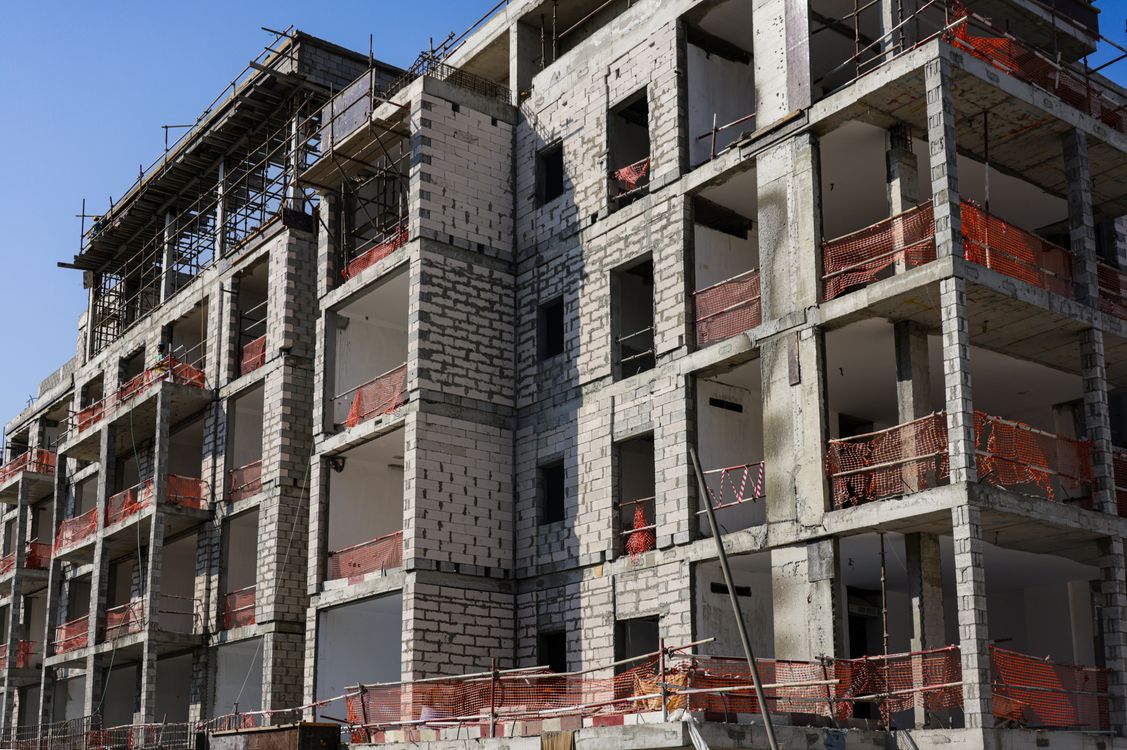
 Blog
BlogA construction dispute in Turkey may begin with an unfinished project, defective work, an unpaid progress payment or an unexpected demand for additional money. Before deciding whether to terminate, withhold payment or bring proceedings, the parties need to establish what was promised, what has actually been performed and which contractual and legal rules govern the relationship. The strongest starting point is a coherent project record, not simply a demand for compensation.
This guide concerns owners, employers, contractors and investors dealing with construction or substantial refurbishment contracts. Buying an apartment off-plan can involve a different contractual structure and consumer protections, so that transaction should not automatically be treated as a direct contract with the builder. The classification affects the available claims, the proper parties and the route to resolution.
Contents
1. Identify the contract and the responsible parties
Start with the signed contract, attachments, technical specifications, drawings and subsequent amendments. Establish whether the dispute arises from a construction works agreement, a sale, a subcontract or a mixed arrangement. An agreement involving land transfers in exchange for construction raises additional form and property questions. The title used on the document is not always decisive.
Identify the legal entity that undertook the obligation and the capacity in which each person signed. A project brand, site manager, landowner and contracting company may be different parties. Payment to one group company does not by itself establish that every company in the group guarantees performance. Map the contract chain before directing notices or selecting defendants.
2. Build a reliable project chronology
Prepare a dated account of the agreed start, site access, design approvals, payment milestones, changes, inspections and expected completion. Link each significant event to its supporting document. Keep the original contract and correspondence, rather than relying only on a summary produced after relations deteriorated. A disputed instruction may be easier to understand when the preceding design change and response are included.
Preserve lawful copies of site reports, meeting minutes, photographs, invoices and payment evidence. Identify who created each record and whether the other party accepted or disputed it. A collection of undated photographs may show unfinished work without proving when the contractual breach occurred or who caused it. The chronology should record inconvenient facts as well as favourable ones.
3. Assess delay against the actual obligations
A missed date needs to be examined alongside the agreed scope and any conditions affecting commencement or completion. Ask whether the owner supplied access, approved drawings and made required payments, and whether the contractor provided timely progress and delay notices. Contractual extensions and genuinely disputed changes should be separated from unsupported explanations.
Article 473 of the Turkish Code of Obligations addresses certain circumstances in which a contractor's late start or delay may justify action before the delivery date. It should not be read as an unrestricted right to cancel whenever progress disappoints. Counsel should assess the statutory conditions, contractual procedure and available evidence before the owner announces termination or appoints a replacement.
4. Separate defects from incomplete or changed work
An unfinished item, a departure from specification and a defect in completed work are not necessarily the same claim. Prepare an itemised schedule identifying the promised standard, observed condition, supporting evidence and proposed investigation. A technical expert may be needed to distinguish poor workmanship from design problems, subsequent damage or ordinary maintenance.
Under the Code of Obligations, inspection and notification after delivery matter, and later-discovered defects require particular attention. Do not assume that an informal complaint months earlier preserves every right. Have the timing, content and method of notice reviewed. Possible remedies can include correction or price-related relief, but the available choice depends on the defect, the contract and the applicable legal conditions.
5. Examine extra work and price adjustments
Many disputes concern whether additional work was instructed, included in the original price or performed without approval. Match each claimed variation to the instruction, the person authorising it and any agreed valuation. A revised drawing may establish a change in design without resolving who agreed to pay for it. Likewise, an invoice does not settle whether the work was contractually authorised.
Identify whether the price was fixed, measured by quantities or based on another mechanism. Rising costs do not automatically permit unilateral repricing. Equally, the owner should not assume that every requested alteration must be supplied within the initial price. Review the contractual mechanism and any applicable statutory adjustment conditions before accepting or rejecting an additional account.
6. Review progress payments and retention
Compare payment applications with measurement records, certificates, approvals and actual transfers. Distinguish an amount invoiced from an amount certified, due or paid. Record any retention, advance recovery, security or disputed deduction. The accounting presentation and the contractual basis should tell the same story; a total balance alone may hide several different disagreements.
Before withholding payment, determine the legal and contractual basis and the consequences of withholding too much. Before demanding the full balance, a contractor should address any conditions for certification or delivery. If the parties wish to continue working while part of the account is disputed, document what is paid without treating an interim arrangement as a general release.
7. Preserve the site condition before it changes
Repairs, demolition or a replacement contractor can remove the evidence needed to explain the original problem. Consider whether a court-assisted preservation of evidence is appropriate under the Civil Procedure Code, especially where proof may be lost or become harder to obtain. An expert inspection arranged privately and a court evidence-preservation process have different procedural roles.
Ask for an inspection that answers useful questions: what remains unfinished, what departs from the specification, what may have caused it and what investigation is still required? An evidence report is not itself a final award of damages. Urgent safety work should not be delayed merely for photographs; record the necessity and seek advice on preserving what can safely and lawfully be documented.
8. Evaluate termination before removing the contractor
Ending the relationship can change access, custody of materials, subcontract arrangements, guarantees and the cost of completing the project. A termination based on an alleged breach is not the same as an owner's decision to stop the project for convenience. The financial consequences and required steps need their own analysis.
Prepare the notice with the relevant grounds, prior communications, any required opportunity to remedy and a workable handover plan. Avoid assuming that changing locks or hiring another team will strengthen the claim. Those actions may generate counterclaims if they prevent performance or destroy evidence. Where continuation remains practical, a documented cure programme may be worth comparing with termination.
9. Calculate the claim without double counting
Separate completion costs, repair costs, agreed delay consequences and other alleged losses. Support each item with a calculation and the evidence connecting it to the breach. A replacement quotation may be relevant but should be checked for upgraded specifications or work beyond the original bargain. Expected rental or business income needs a defensible basis rather than an optimistic forecast.
Review causation, avoidable loss and any contractual limitations or penalty provisions. Do not add overlapping amounts simply because they have different labels. A realistic claim also considers the counterparty's response, available assets and enforcement costs. The face value of a demand is not the same as the amount likely to be recovered.
10. Choose the dispute-resolution route
The correct court or other forum depends on the relationship and relief sought. Consumer, commercial and ordinary civil disputes should not be treated as interchangeable. Review any valid arbitration clause, jurisdiction provision and contractual dispute process. For claims falling within mandatory pre-action mediation rules, the applicable requirement and exceptions must be checked before filing.
Urgent evidence preservation and interim protection require separate consideration from final relief. Discuss whether a demand, negotiation, mediation, court claim or arbitration addresses the actual objective. A settlement should specify payment or repair obligations, deadlines, verification and the scope of any release. An agreement to discuss completion later may simply postpone the same dispute.
11. Organise cross-border documents and instructions
A foreign owner or contractor should identify the authorised decision-maker, the language of the signed contract and the location of original evidence. Translations should preserve technical terms and document references consistently. Corporate authority and a properly prepared power of attorney may be needed for representation; a project employee's involvement does not establish authority for litigation or settlement.
Keep instructions to counsel distinct from the engineer's technical assessment. The legal team needs the expert's findings but should not promise structural conclusions without the relevant expertise. Agree how urgent notices, inspection dates and settlement proposals will reach overseas management. Delayed internal approvals can undermine a carefully prepared response.
12. Prepare an initial dispute assessment
For an initial review, provide the parties' identities, project location, contract type, current stage, central complaint and the next known deadline. List payments, notices and any existing proceedings. Start with a non-confidential summary so conflicts and a secure document channel can be addressed before sensitive records are supplied.
The assessment should identify immediate evidence and notice issues, possible remedies and the documents required to evaluate exposure. Limitation and notification periods should be checked for the actual claim, not borrowed from a different construction problem. This article is general information and does not establish that termination, withholding payment or a particular compensation demand is justified in an individual project.
Related reading: Delayed off-plan property purchases; Buying commercial property; Commercial contract review.
Request a Construction Dispute Review
Send a brief summary for an initial review. Please avoid confidential documents until conflicts and an appropriate sharing method have been addressed. Sending a message does not establish representation or suspend a deadline.
Primary legal references: Turkish Code of Obligations: contracts for work; Civil Procedure Code: evidence and interim procedures; Court of Cassation: inspection and defect notification; Court of Cassation: evidential role of a preservation report; Ministry of Justice: mediation in consumer disputes. Read alongside current legislation and the particular procedural record. Prepared October 13, 2026.
Frequently Asked Questions
Can I terminate because construction is late?
Possibly, but the contract, cause of delay, statutory conditions and notice procedure need review. Delay does not create an unrestricted cancellation right.
Should defects be recorded before repairs?
Usually the existing condition should be documented before it changes, with expert or court-assisted evidence preservation considered where appropriate. Necessary safety action should not be postponed.
Does an invoice prove that extra work was approved?
Not by itself. The instruction, authority, agreed scope and valuation must be examined together.
Can a foreign owner pursue the dispute from abroad?
Representation may be arranged with appropriate authority and documents, although technical access and case-specific personal steps may still be needed.
Are all construction disputes commercial court cases?
No. The parties, relationship and requested relief affect the forum and any mediation requirement. A consumer purchase and a commercial works contract may follow different routes.